
Open Display Chiller Placement and Maintenance Checklist for Convenience Stores
Use this bilingual checklist to review placement, airflow protection, maintenance access, and store routines before approving an open display chiller for a convenience-store project.
Haishengda Editorial Team
An open display chiller can create strong grab-and-go sales in a convenience store, but only when placement, loading discipline, and maintenance access are considered before the store signs off the layout. Buyers often focus on shelf exposure first and then discover later that the cabinet sits in a draft, the return grille is blocked during restocking, or the service team has no practical space to clean and inspect the condensing section.
Start with store conditions, not only cabinet dimensions
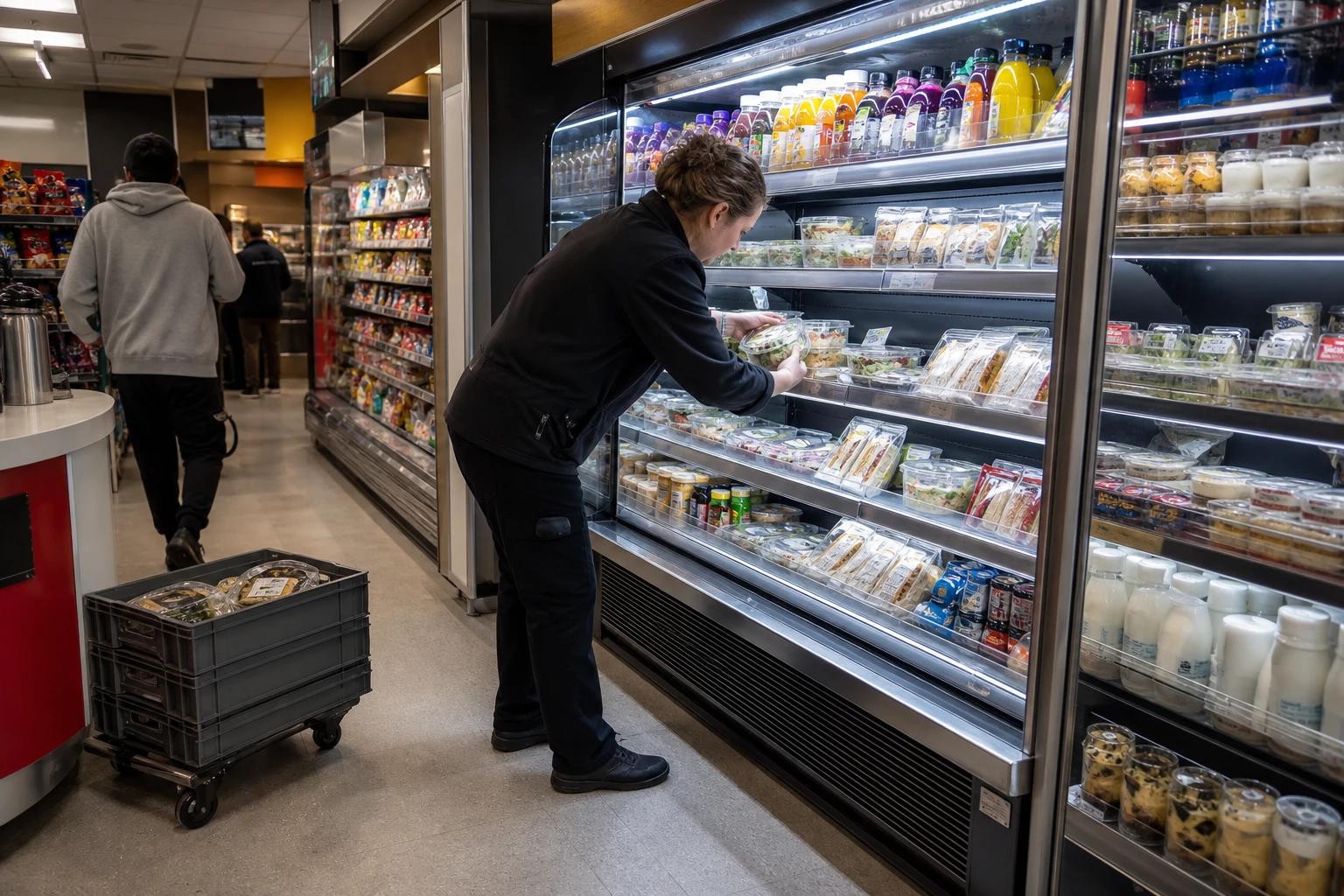
The first checklist item is the store environment. Review where the cabinet will sit relative to the entrance, checkout queue, HVAC diffusers, and high-turn corners. Open cases are more sensitive to surrounding air movement than closed-door cabinets, so a location that looks convenient on paper can create unstable operation if warm drafts or repeated traffic pressure disturb the air curtain.
For convenience-store projects, buyers should also look at aisle behavior. If shoppers pause in front of sandwiches, dairy snacks, or chilled meals, the cabinet needs enough front clearance for browsing without turning the aisle into a bottleneck. If the project is tight on width, a narrow convenience chiller or a shorter open-front run may be easier to manage than a wider cabinet that forces staff and customers into the same circulation line.
Buyer questions for layout review
Ask where the store receives the strongest drafts, how often the cabinet will be restocked during peak traffic, whether night curtains are part of the specification, and how much front and service clearance the operator can realistically preserve after installation. These details matter more than a brochure photo because they determine whether the cabinet can hold a stable routine on the shop floor.
Protect the air curtain and loading boundary
Open display chillers rely on an air curtain, not a physical door barrier. That means operators have to protect the discharge and return path every day. Packouts that extend too far forward, promotional baskets placed in front of the base grille, or shelf loads that cover the intended airflow path can reduce performance long before the operator realizes why product temperature or frost patterns look inconsistent.
A practical procurement discussion should therefore include load-line discipline. Ask the supplier to explain how the cabinet should be stocked, what must remain clear near the lower return area, and which shelf presentation habits are acceptable during promotions. A convenience store with frequent replenishment needs a cabinet family that staff can load correctly under real operating pressure, not only during a showroom demo.
Plan maintenance access before approving the fixture run
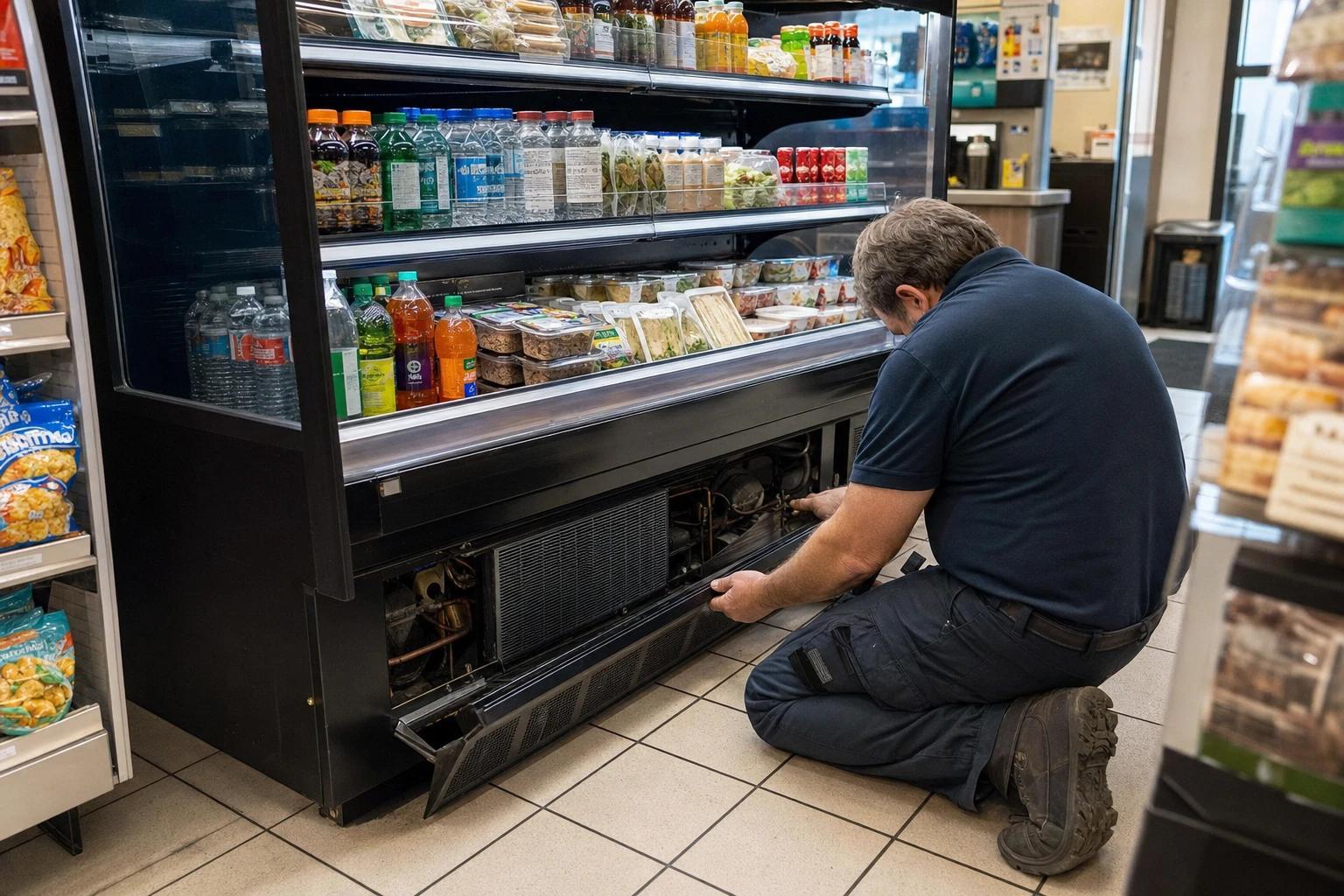
Maintenance access is where many open-case projects become expensive. If the condensing section cannot be reached without moving adjacent fixtures, cleaning is delayed. If the front service panel is blocked by merchandising add-ons or store furniture, inspections become irregular. If staff cannot pull down the night curtain easily after closing, an energy-saving feature becomes a feature that exists only on paper.
Buyers should ask the supplier to show the service side, panel opening path, cleaning points, and the operator routine expected every week or month. This is especially important for export projects where the installation team and the long-term store operator may be different parties. A cabinet that is easy to service in a factory presentation can still become awkward in a compact retail aisle if the surrounding layout is not reviewed early.
Minimum maintenance topics to confirm
Confirm how the condenser area is cleaned, whether staff must remove a grille or open a hinged panel, how the night curtain should be used after store hours, what symptoms indicate airflow obstruction, and who is responsible for checking refrigerant-related service issues. These are not after-sales details; they are part of procurement risk control.
Use a practical weekly operating checklist
A strong convenience-store routine is simple enough that shift staff can repeat it without guesswork. The weekly checklist should include checking that no products extend into the air-curtain zone, verifying that the lower return grille is visible and clean, making sure promotional signage does not block intake or discharge areas, confirming that the night curtain is intact and used consistently, and escalating any unusual noise, condensation, or unstable cabinet temperature to service support.
If the project expects high turnover in grab-and-go foods, it is worth pairing the operating checklist with a restocking checklist. Staff should know which SKUs belong on the cabinet, how far forward facings can be built, and when to stop using a shelf configuration that blocks the intended airflow. Procurement is more successful when the operating team receives a cabinet the store can actually manage.
How HAISHENGDA can help with the configuration review
For convenience-store programs, HAISHENGDA can help buyers compare an open display merchandiser family, a narrow convenience chiller, and a wider multi-deck option against real aisle conditions, stocking rhythm, and OEM branding needs. The useful starting point is not just the target width, but the combination of shopper access, restocking routine, service access, and after-hours operating discipline.
If you are planning a convenience-store refrigeration run, contact HAISHENGDA with the store plan, target product mix, expected aisle width, and service expectations. A short configuration review can prevent avoidable layout changes, unstable airflow behavior, and maintenance bottlenecks after installation.