Open Display Chiller vs Glass Door Beverage Cabinet: A Convenience Store Buying Guide
Compare open-front chillers and glass-door beverage cabinets by merchandising, energy control, aisle layout, and maintenance before choosing a convenience-store refrigeration format.
Haishengda Editorial Team
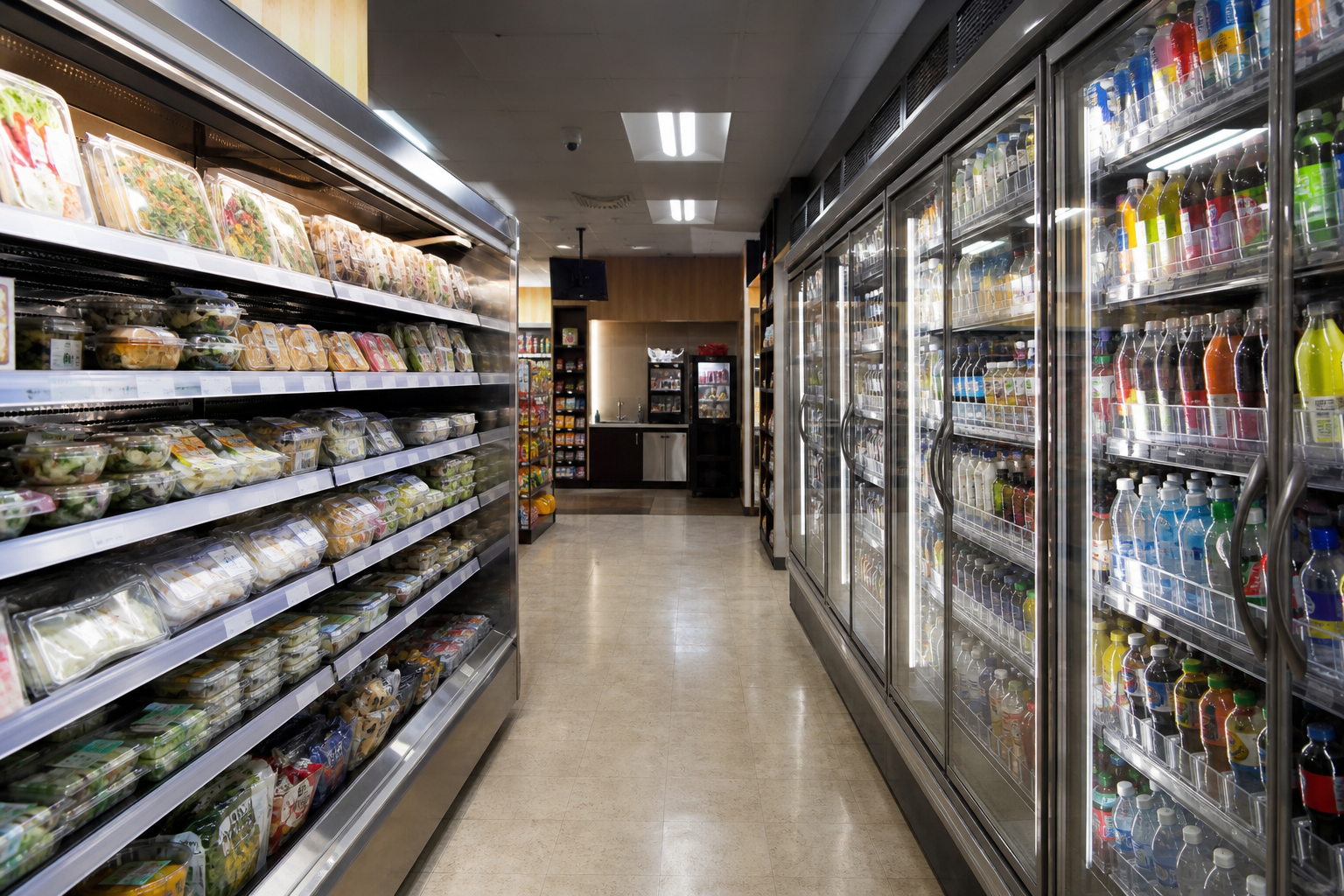
For convenience stores, the choice between an open display chiller and a glass-door beverage cabinet is rarely a simple product preference. It is a merchandising decision, an energy-control decision, and a maintenance decision at the same time. The right answer depends on what customers need to grab quickly, how narrow the aisle is, how often staff restock the cabinet, and whether the project values immediate access more than stronger separation between the refrigerated zone and the shop floor.
Start with the buying job, not the cabinet name
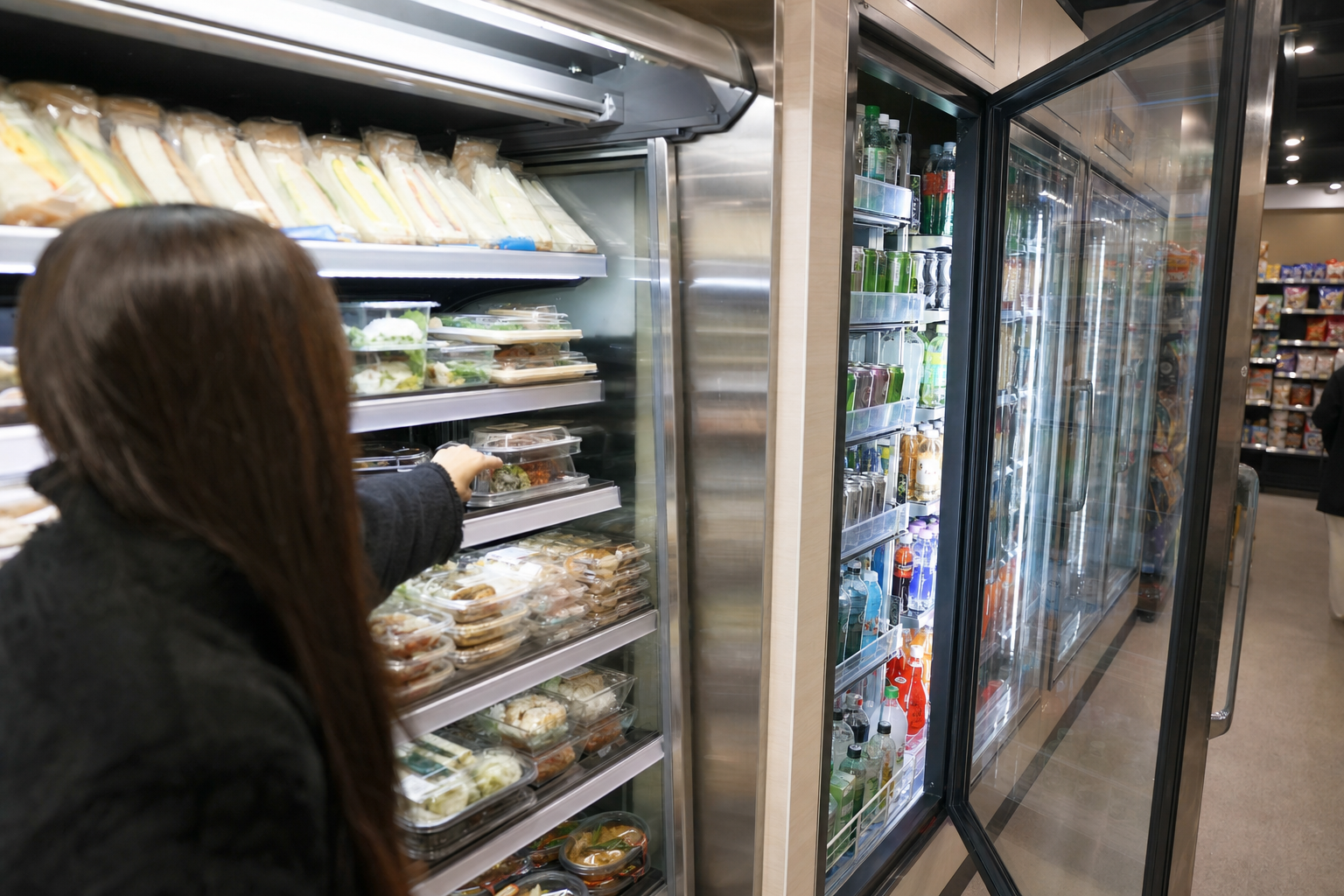
Open-front chillers are usually selected when the store wants fast self-service and strong product exposure. They work well for packaged fresh food, prepared meals, impulse drinks, fruit cups, sandwiches, and other grab-and-go items where the shopper should see the product and take it without opening a door. Glass-door beverage cabinets are usually selected when the assortment is beverage-heavy, the store wants better separation from room air, and the door itself does not create a serious traffic problem.
A practical way to start is to define the buying job in one sentence. If the job is “make chilled food impossible to miss near a busy aisle,” an open display chiller is often the first family to review. If the job is “hold packaged drinks with clear visibility while limiting cold-air loss,” a glass-door beverage cabinet deserves priority. From there, compare the cabinet family, aisle width, product mix, and maintenance routine before locking the layout.
Energy control: understand why doors change the conversation
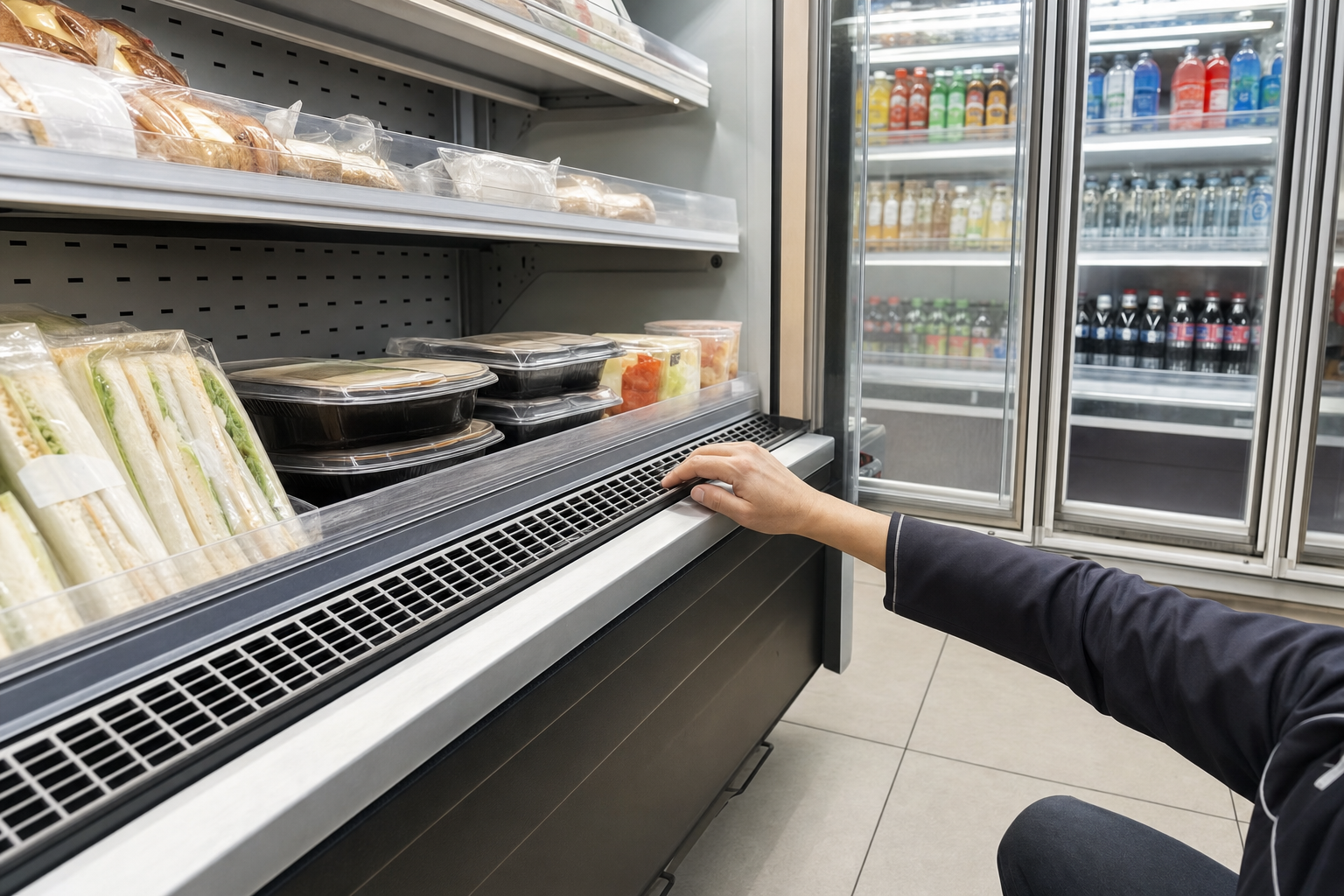
Open-front cabinets depend on a stable air curtain and correct loading practices. If shelves are overloaded, discharge or return air paths are blocked, or the cabinet sits in a strong draft, the cabinet has to work harder to maintain product conditions. Glass doors add a physical barrier, so they can reduce the exchange between cabinet air and store air, but they introduce their own design questions: door swing, gasket condition, anti-fog performance, lighting, and customer behavior.
For procurement teams, the point is not to assume one format is always better. The useful question is whether the merchandising benefit of an open front justifies the additional sensitivity to airflow and store environment. In a high-traffic fresh food zone, that trade-off may be worthwhile. In a beverage wall with stable facings and repeat purchases, glass doors may create a more controlled format.
Questions to ask suppliers
Ask how the cabinet protects airflow during normal stocking, what clearance is needed around the air inlet and outlet, how the cabinet performs when located near entrances or HVAC diffusers, and what daily practices staff should follow. For glass-door cabinets, ask about gasket replacement, door self-closing behavior, condensation management, and whether the door layout matches the aisle width.
Merchandising: match access speed with product behavior
Open display chillers make sense when the product benefits from immediate touch-and-take shopping. Fresh meals, salads, dairy snacks, and ready-to-eat packs often sell better when shoppers can scan the shelf without a door barrier. They also help operators create promotional blocks and fast replenishment routines. The trade-off is discipline: products must stay behind the air-curtain boundary, shelves should not be packed beyond the manufacturer’s guidance, and staff need a simple routine for checking blocked return grilles.
Glass-door beverage cabinets are strong when the store wants neat vertical facings, beverage brand visibility, and more controlled refrigerated holding. They are especially suitable for bottled drinks, cans, dairy beverages, and impulse cold drinks where the shopper expects to open a door. Door cabinets can also make the aisle feel more organized, but in a narrow convenience store the door swing and customer dwell time must be checked before final layout approval.
Maintenance planning: the best cabinet is the one your store can keep stable
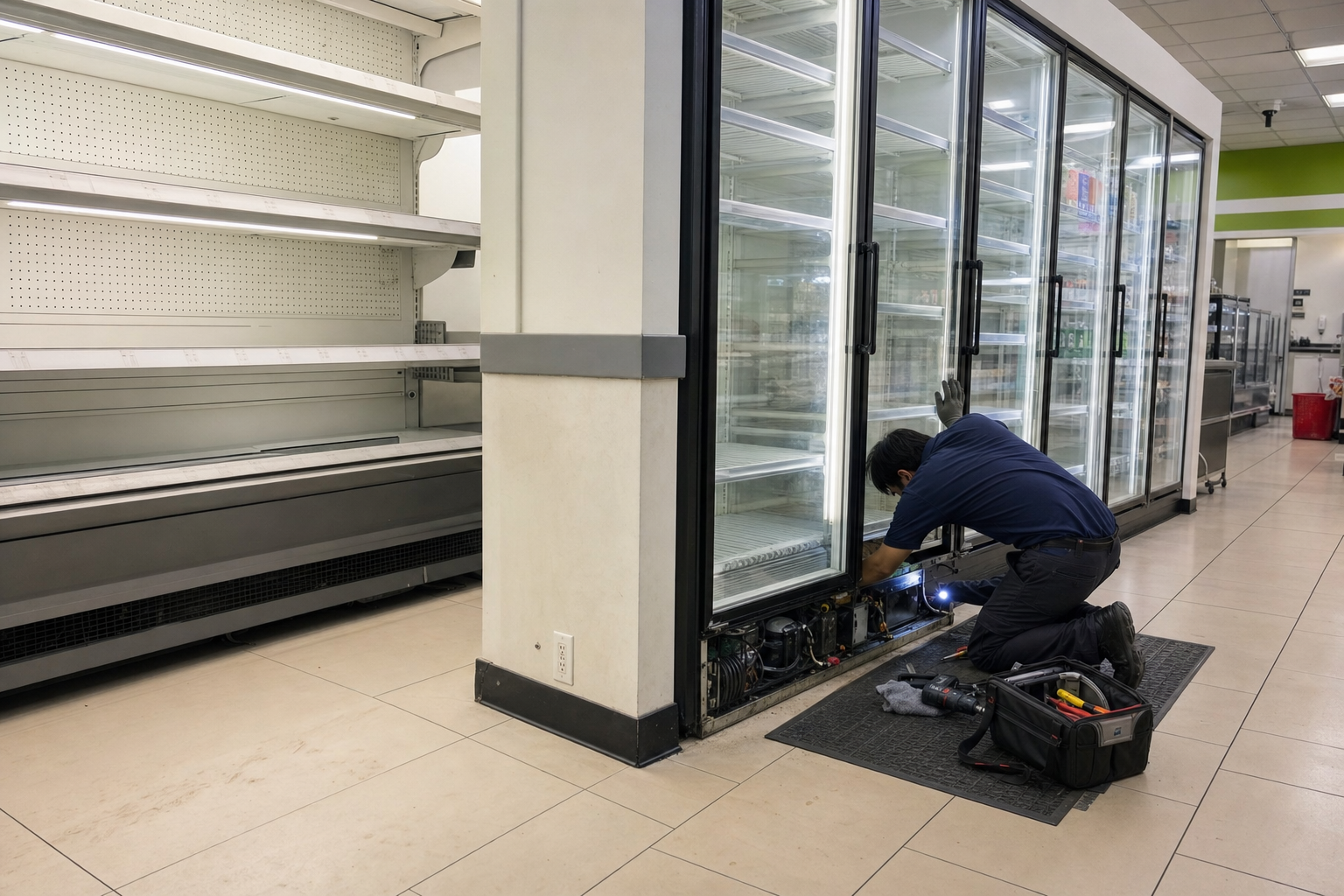
Maintenance is where many poor cabinet choices become visible. Open-front cabinets need careful attention to air paths, night curtains if supplied, product loading lines, and condenser cleanliness. Glass-door cabinets need those refrigeration checks too, plus door hardware, gasket condition, hinges, and condensation management. A door that does not close properly can erase much of the benefit of choosing a closed format.
Before issuing a purchase order, ask the supplier to show where routine cleaning happens, which panels need to be opened, how staff can avoid blocking airflow during stocking, and what symptoms indicate service is needed. This is especially important for overseas buyers because the store team, distributor, and manufacturer may not be in the same country after installation.
A simple decision matrix for convenience-store projects
Choose an open display chiller when
Choose an open display chiller when the product category depends on fast browsing, impulse pickup, frequent restocking, and strong shelf exposure. It is also a good candidate when the store has enough aisle width, stable indoor airflow, and staff who can follow loading and cleaning routines.
Choose a glass-door beverage cabinet when
Choose a glass-door beverage cabinet when packaged drinks dominate the range, the project prioritizes stronger cold-zone separation, the aisle can handle door opening, and staff can maintain gaskets and door-closing performance. It is also a clean solution for beverage walls and branded drink zones.
Review a mixed layout when
Many convenience stores should not choose only one format. A mixed layout can use open-front chillers for prepared foods and grab-and-go meals, while glass-door cabinets handle beverages. This gives shoppers fast access where it matters and stronger separation where the product behavior allows it.
How HAISHENGDA can support the configuration review
For a new convenience-store project, share the store plan, target product categories, expected aisle width, whether the cabinets will be plug-in or remote-ready, and any OEM branding needs. HAISHENGDA can help review whether a narrow convenience chiller, an open display chiller family, or a glass-door drinks cabinet is the better starting point. For scenario-based reading, connect this article to /applications/convenience-store.
Contact HAISHENGDA for a configuration review before confirming the cabinet family. A short review of aisle pressure, merchandising intent, maintenance access, and stocking routine can prevent expensive layout changes after installation.