Display Refrigeration for Hot and Humid Stores: A Buyer's Guide for the Gulf and Southeast Asia
A display cabinet tested at 25°C behaves very differently in a 35°C storefront with 80% humidity. Here is what to ask your supplier before ordering for the Gulf or Southeast Asia.
Export Sales Engineer
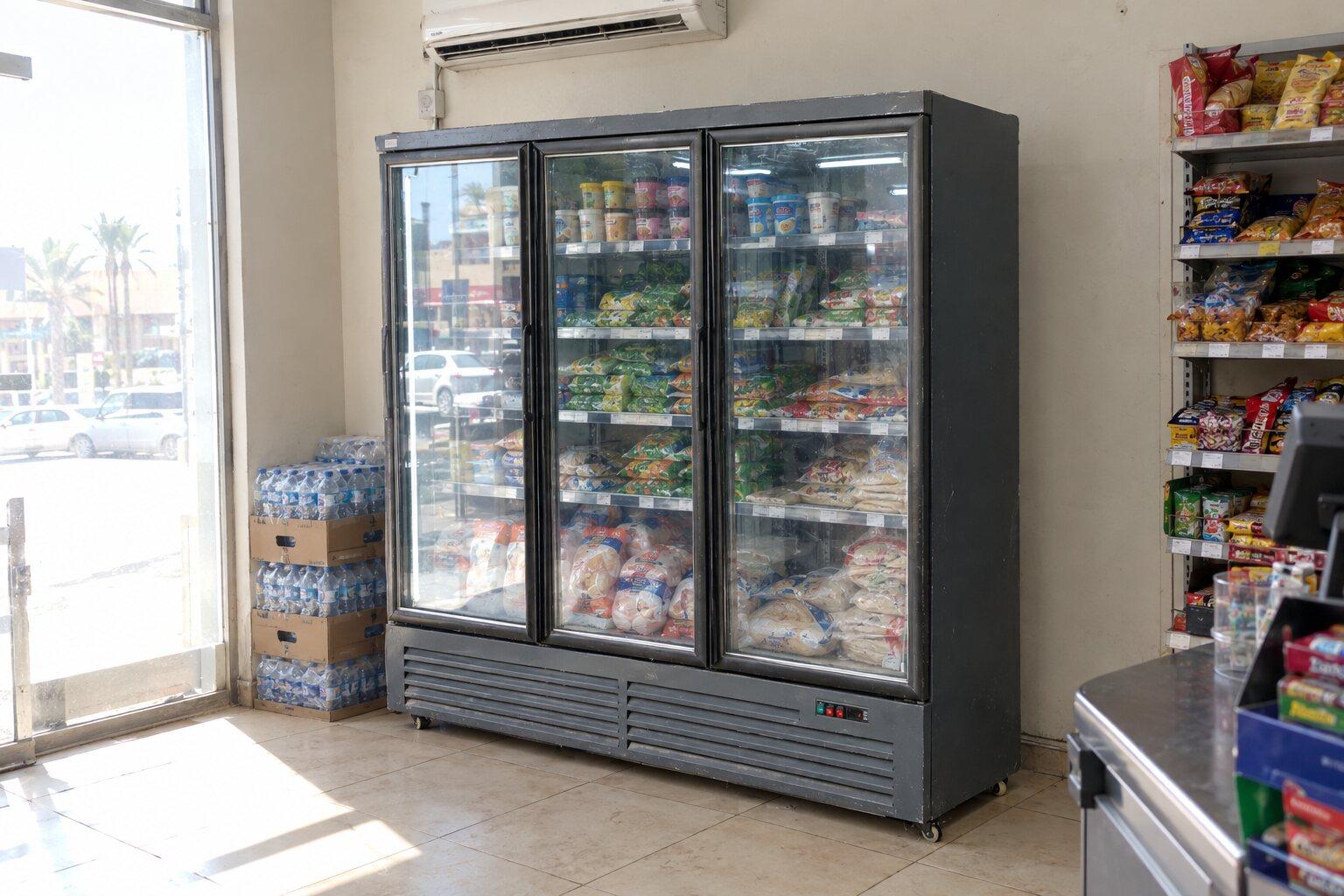
Most display cabinets are rated and tested in a room at about 25°C. Many real stores are not like that. Think of a grocery near the entrance in Riyadh in July, a petrol station shop with weak air conditioning, or a minimarket in Manila that opens straight onto the street. In these places a cabinet can face 32 to 38°C and 70 to 80% humidity for hours. It keeps running, but it runs longer, uses more power, fogs up, and may stop holding temperature.
This guide explains what changes in hot and humid conditions, what to ask your supplier, and which cabinet designs cope best.
What heat does to a display cabinet
Every plug-in display cabinet rejects heat into the room through its condenser. The hotter the room air, the harder it is to release that heat. In practice, as the room gets hotter:
- the compressor runs longer with fewer breaks,
- energy use rises,
- the cabinet recovers more slowly after doors are opened or new stock is loaded,
- and once the room passes the cabinet's design limit, the cabinet cannot reach its set temperature at all.
The last point is the one that causes complaints. A freezer specified at −22°C to −18°C may only reach −14°C in a 38°C corner. The cabinet has not failed; it is working outside the conditions it was designed for.
Know the test conditions: climate classes
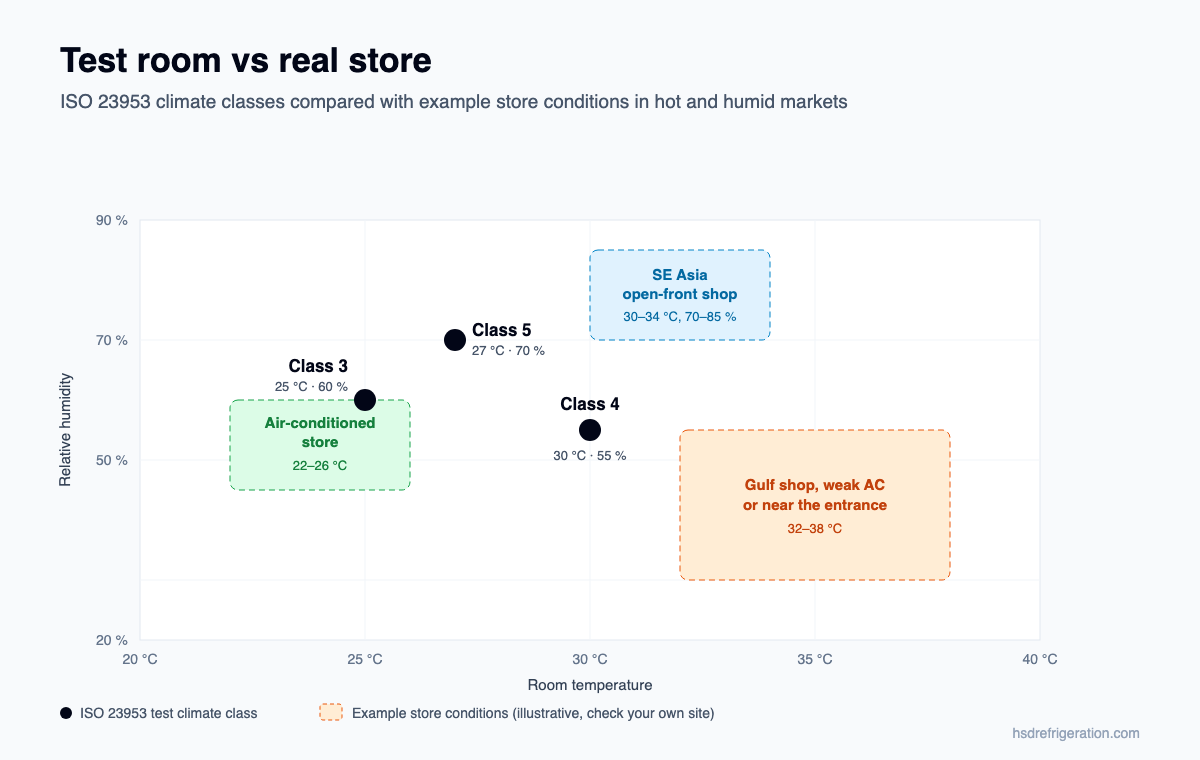
Commercial display cabinets are tested under ISO 23953 in controlled rooms called climate classes. Three are common:
- Climate class 3: 25°C, 60% relative humidity. The most widely used test condition.
- Climate class 4: 30°C, 55% relative humidity.
- Climate class 5: 27°C, 70% relative humidity.
When a supplier quotes a temperature range or energy figure, ask at which climate class it was measured. A cabinet that holds −18°C at class 3 has proven it can do so at 25°C. It has not proven anything at 35°C.
You may also see the household label "T class" (tropical, up to 43°C). It comes from the household refrigerator standard (IEC 62552) and is tested differently. It is a useful hint, but it is not the same thing as a commercial climate class.
Practical rule: tell your supplier the real conditions at the spot where the cabinet will stand: the highest room temperature, the humidity, and whether the air conditioning is switched off at night. That tells you more than any label.
Humidity and glass door condensation
In Southeast Asia the bigger problem is often humidity rather than heat.
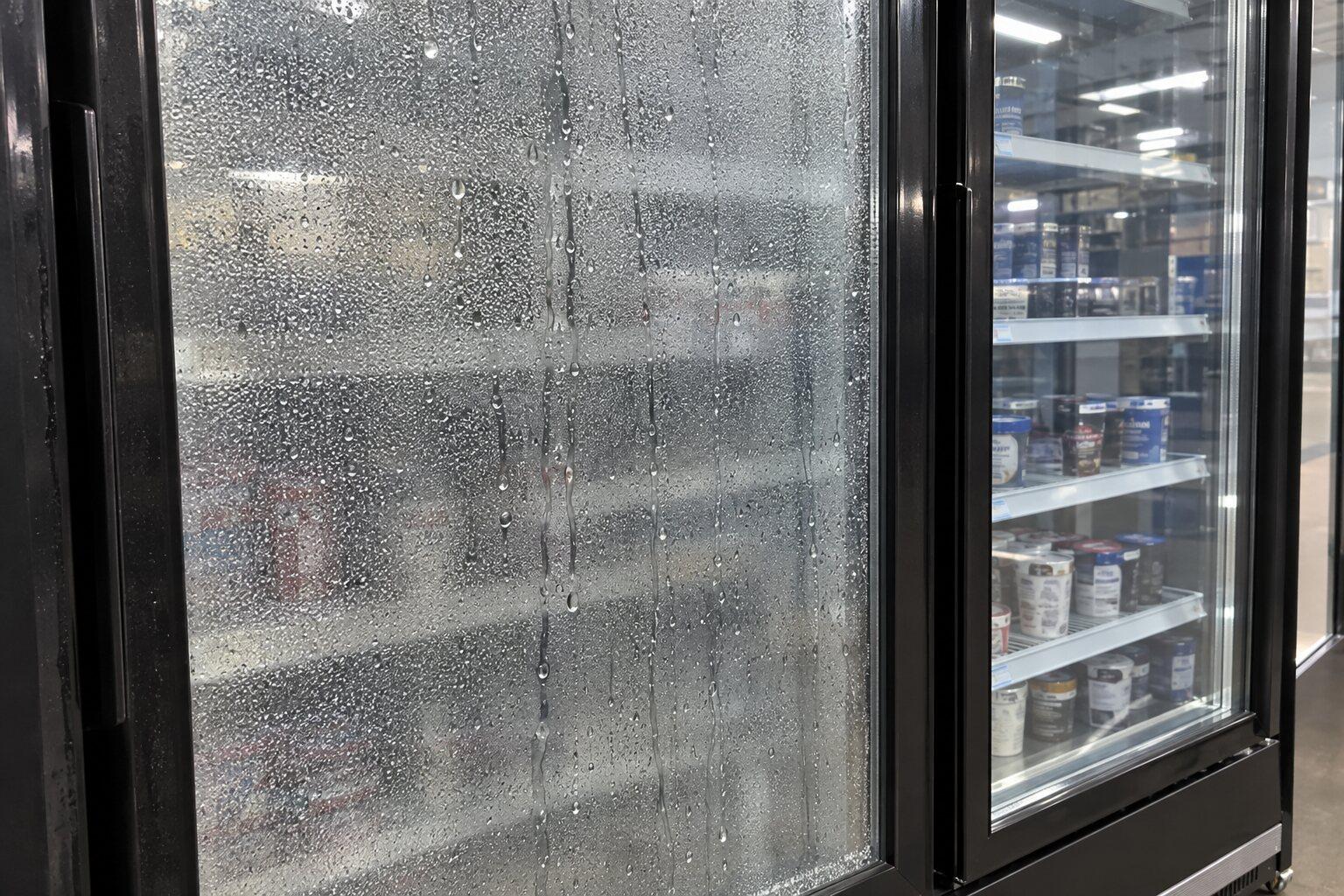
Water condenses on any surface colder than the air's dew point. In a store at 30°C and 70% relative humidity, the dew point is about 24°C. In an open-front shop at 32°C and 80%, it is about 28°C. The outer pane of a freezer door is far colder than that unless it is heated. The result is fogged glass that hides the products, and drips that pool on the floor.
What helps:
- Heated, multi-pane glass doors on freezers. Our upright glass door freezers, from the single-door to the 3-door bottom-mount model, use triple-pane insulated, electrically heated, self-closing doors. The multi-door glass door freezer uses framed glass doors with anti-condensation heating. Heating keeps the outer glass above the dew point, and self-closing doors cut the time the cabinet stands open.
- Chillers fog less, but are not immune. A +2°C to +8°C beverage cooler has a much smaller temperature gap across the glass, but in very humid stores it can still fog. For humid markets, the glass door build of our coolers (double or triple glazing, Low-E coating, heated glass) can be specified to order.
- Control the room where you can. Keep glass doors away from entrances, and avoid AC outlets that blow humid outside air straight at the glass.
Open chillers in hot, humid stores
Open multideck chillers rely on an air curtain: a sheet of cold air flowing down across the open front. Warm, humid store air mixes into that curtain all the time. The warmer and wetter the room, the more heat and moisture the cabinet takes in, and the more often it has to defrost.
An open multideck chiller works well in a properly air-conditioned convenience store. If the store is hot, humid or open to the street, a sliding glass door multideck chiller is usually the safer choice. It keeps the same shelf layout, but the sliding doors stop most of the cold loss and do not take up aisle space when opened.
Installation: give the condenser room to breathe
In hot climates, where you put the cabinet matters as much as which model you buy.
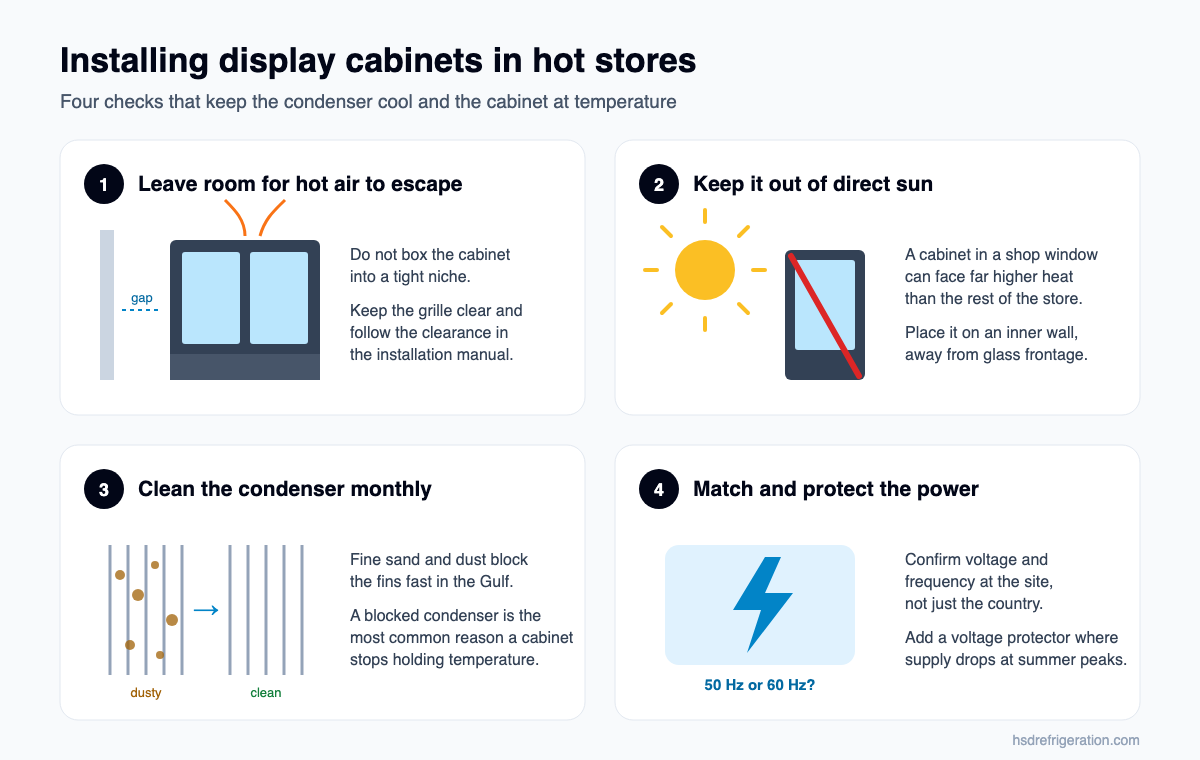
- Leave space around the condenser grille. Do not push the cabinet into a tight niche or against a wall where hot exhaust air is trapped and sucked back in. Follow the clearance given for your model.
- Keep it out of direct sun. A cabinet in a shop window in the Gulf can face much higher temperatures than the rest of the room.
- Clean the condenser regularly. Fine sand and dust in the Gulf clog condenser fins quickly. A blocked condenser in a hot room is the most common reason a cabinet stops holding temperature. Brush or vacuum the fins monthly in dusty areas.
- Protect against unstable voltage. Where voltage drops during summer peak hours, use a voltage protector or stabilizer to protect the compressor.
Get the voltage and frequency right
Many hot markets run on 60 Hz. Saudi Arabia uses 230 V / 60 Hz and the Philippines 220 V / 60 Hz, while the UAE, Malaysia, Indonesia and Thailand use 50 Hz. A compressor built for 50 Hz will not perform as rated on 60 Hz. All our display cabinets are available in 220–240V/50Hz, 220V/60Hz and 110–120V/60Hz. Confirm the voltage and frequency at the site, not just the country. You can browse the full range of upright glass door cabinets for hot-climate projects.
Checklist before you order for a hot or humid market
- What is the highest room temperature and humidity at the spot where the cabinet will stand?
- Is the air conditioning switched off at night or at weekends?
- At which climate class were the quoted temperature and energy figures measured?
- Are the glass doors heated and multi-pane? Are they self-closing?
- For open chillers: is the store properly air-conditioned, or would a glass-door version be safer?
- Is there enough clearance around the condenser, and can staff reach it for cleaning?
- Does the site supply match the cabinet's voltage and frequency?
FAQ
Can I use a standard display freezer in a store without air conditioning?
It depends on how hot the store gets. Above the cabinet's design condition it will run continuously and may not reach −18°C. Send us the real room conditions and we will tell you honestly whether a standard model will cope.
Why does my freezer door fog in the morning but not in the afternoon?
Humidity is often higher in the morning, especially right after the AC is switched on or the shutters open. Heated glass doors prevent most of this. If a heated door keeps fogging, check that the door heater is working.
Is R290 suitable for hot climates?
Yes. R290 is widely used in plug-in commercial cabinets and performs well at high ambient temperatures. What matters more is that the compressor and condenser suit the real room conditions.
Selling into the Gulf or Southeast Asia?
Tell us your store conditions and local power supply, and we will recommend cabinets that suit them. Request a quote.